Pixels Don't Lie: How the Community Used Screenshots to Bust Brawl Stars Wide Open
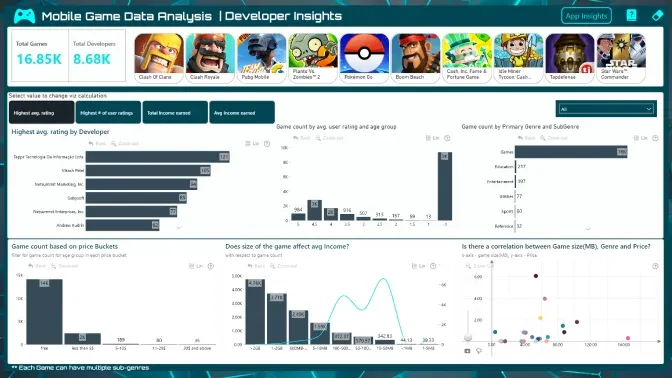
Photo: mobile game screenshot analysis magnifying glass gaming detective, via zoomchartswebstorage.blob.core.windows.net
There's a moment every Brawl Stars player knows — that split second where something feels off. A shot clips through a wall it shouldn't. A brawler survives a hit that should've deleted their health bar. The match ends and you're left staring at your screen thinking, "Did that actually just happen?"
For most players, that moment fades. You queue back up and move on. But for a specific breed of community member — the ones with screen recorders running, slow-motion playback queued, and a genuine obsession with how this game works under the hood — that moment is the beginning of something.
These are the people who turned screenshots and clips into actual investigative tools. And more than a few times, they've caught things Supercell's own developers completely missed.
The Screenshot as Evidence
It sounds almost too simple. A screenshot is just a frozen moment, right? But in a game as fast-moving as Brawl Stars, where matches can last under two minutes and abilities resolve in milliseconds, a single frame can reveal a lot.
Think about it from a forensics angle. When something looks wrong in a clip, the first move is to slow it down — frame by frame if possible. Content creators do this all the time when they're building highlight reels, but the detective-minded players in the community figured out pretty early that the same process works for spotting inconsistencies. Hitboxes that don't match the visual model. Projectiles that pass through geometry. Damage numbers that don't line up with the math.
Once you know what normal looks like, the abnormal starts to jump out at you.
Real Talk: The Community Has Caught Real Issues This Way
Without naming specific users to put them on blast, the Brawl Stars subreddit and various Discord servers have a long history of posts that start with something like, "Hey, does anyone else notice this in this clip?" followed by a zoomed-in screenshot with a circle drawn around something suspicious.
Some of the most notable community-driven discoveries have involved:
Hitbox mismatches. Several brawlers have had periods where their visual attack animation didn't accurately represent the actual damage zone. Players caught this by overlaying screenshots of the animation frame with screenshots of the resulting damage — and the gap was obvious once you looked at them side by side.
Wall-clipping abilities. Certain super attacks and gadgets have, at various points, passed through terrain they weren't supposed to. Community members documented these with slow-motion clips, often slowing footage down to single-frame increments to show the exact moment a projectile phased through solid geometry.
Respawn and spawn protection exploits. There have been periods where specific brawler combos could manipulate spawn timing in ways that gave teams an unfair edge. These were notoriously hard to describe in text — but a well-captured clip made the problem immediately obvious, even to someone who'd never encountered it in a match.
In several cases, these community-submitted clips and screenshots showed up in Supercell's own patch notes as acknowledged fixes. The pipeline from "random player notices something weird" to "official patch" is real, and visual evidence is almost always what makes that pipeline move.
The Detective Work Is Actually Kind of Impressive
Here's the part that doesn't get enough credit: this stuff takes real effort. Slowing down footage isn't just hitting a button. You need a recording that's high enough quality to survive that kind of zoom and manipulation. You need to know what you're looking at. And you need to be able to explain it in a way that other people can follow.
Some community members have gotten genuinely skilled at this. They'll grab a clip, pull it into a video editor, isolate the relevant frames, annotate them, and post a full breakdown. It's the gaming equivalent of a news outlet analyzing security footage — except instead of a crime scene, it's a Gem Grab match where Spike's attack somehow went through a cactus.
The annotation part matters more than people realize. A raw screenshot of a hitbox issue looks like noise to someone who doesn't know what they're seeing. But circle the problem area, add a comparison frame, throw in some arrows — suddenly it's undeniable. The community has gotten good at packaging evidence in a way that's hard to dismiss.
Why Supercell Actually Listens
Here's something worth understanding about how Supercell operates: they're a relatively small team managing a massive live-service game. Their internal QA process is solid, but no testing environment perfectly replicates the chaos of millions of players running every possible brawler combination across every map with every game mode active simultaneously.
The community, effectively, is the largest QA team Supercell has. And when that community shows up with receipts — actual visual evidence, timestamped clips, reproducible steps — it's a lot harder to write off than a vague complaint in the comments.
This is part of why the Brawl Stars dev team has historically been pretty responsive to community-submitted bug reports that come with strong visual documentation. It's not charity. It's practicality. A clear clip of a broken interaction saves their team hours of trying to reproduce something from a text description.
What This Means for How We Watch Clips
This whole phenomenon reframes something interesting about how we consume Brawl Stars content. A highlight clip isn't just entertainment — it's a record. Every clip someone posts is, in some small way, a document of how the game behaved at a specific moment in time.
Most of the time, that document just shows someone popping off with a sick multi-kill. But occasionally, it captures something that shouldn't exist. A frame that breaks the rules. A moment where the game's seams show.
That's part of what makes this community worth paying attention to beyond the highlight reel surface level. The same instinct that makes someone want to clip a crazy play — the desire to freeze a moment and show it to people — is the same instinct that turns an observant player into a bug hunter.
The Takeaway
The next time you're watching a clip and something looks a little wrong, don't just scroll past it. Slow it down. Screenshot it. Post it somewhere and ask if anyone else sees what you see.
You might be wrong. It might just be lag or a visual quirk. But you might also be the person who catches something real — something that, six weeks later, shows up in a patch note as a fixed exploit. It's happened before. It'll happen again.
The game is always moving. But screenshots freeze it. And sometimes, frozen is exactly what you need to see the truth.