Blink and You'll Miss It: Why the Greatest Brawl Stars Plays Are Over Before Your Brain Catches Up
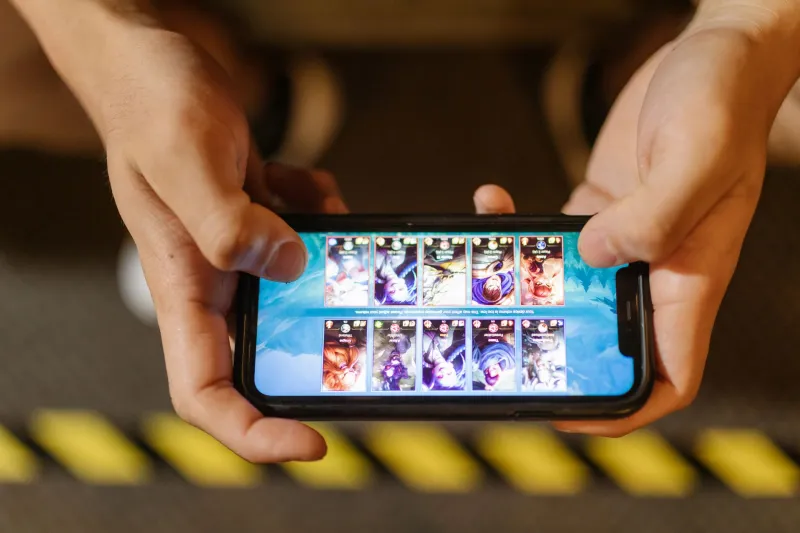
There's a moment in almost every legendary Brawl Stars clip where you have to rewind. Not because the footage glitched or the streamer's mic cut out — but because your eyes literally didn't register what just happened. One second the situation looks unwinnable. Three seconds later, it's over, and the player is already moving on like nothing happened. That gap between the play and your comprehension of it? That's not an accident. It's the whole thing.
Welcome to the world of micro-moments — the lightning-fast decision windows that separate a clip worth clipping from everything else in your session.
Your Brain Is Playing Catch-Up
Human reaction time averages somewhere around 200 to 250 milliseconds for a simple visual stimulus. Sounds fast, right? In Brawl Stars, where a Buzz can close distance and stun in under half a second, or where a Bea charged shot travels across the map in the blink of an eye, that reaction window is basically geological time.
What elite players are doing — and what makes their plays look almost supernatural on video — isn't reacting faster in the traditional sense. They're making decisions before the moment that requires a decision. By the time casual players register that something dangerous is happening, the top-tier play has already been executed and resolved. Viewers watching back a clip are essentially seeing the conclusion of a thought process that started two or three seconds earlier.
This is why the best Brawl Stars clips feel like magic tricks. You're watching the reveal, not the setup.
The Setup Nobody Talks About
Content creator and longtime Brawl Stars clip curator @FrameDropFinn (who runs one of the more underrated highlight channels in the community) put it plainly in a recent conversation: "People always comment on the crazy dodge or the sick super timing, but they never notice the positioning from five seconds before that made the whole thing possible. The play looked insane because everything leading up to it was invisible."
That invisibility is the whole secret. The best micro-moments in competitive Brawl Stars are engineered, not improvised. A player hugging the right side of a bush isn't just playing safe — they're loading a spring. When an opponent steps into the wrong tile, that spring releases, and what viewers see is a three-second explosion of action that looks spontaneous but was effectively pre-calculated.
Pro player Drewski_BS, who competes in Power League at the top end of the ladder, described his mental process during high-stakes matches: "I'm not thinking about what I'm doing right now. I'm thinking about what I want the situation to look like in three seconds. If I can get it there, the actual execution is almost automatic."
That future-state thinking is what creates highlight-reel moments. The clip is just the receipt.
Why Three Seconds Is the Magic Number
It's not arbitrary. Three seconds is roughly the span of working memory for a single visual event — the amount of time your brain needs to encode something as a distinct moment rather than background noise. Clips that peak inside that window hit differently because they outpace the viewer's ability to anticipate the outcome.
Anything longer and the audience starts predicting where it's going. The tension bleeds out. But a play that builds, peaks, and resolves in three seconds or fewer keeps your nervous system in a permanent state of catch-up. That's the physiological reason these clips are so rewatchable — you're not replaying them because you missed something. You're replaying them because your brain is trying to catch something it keeps almost grabbing.
Content creators who understand this instinctively structure their highlight reels around it. The slow burns and the drawn-out team fights get cut. What stays is the stuff that makes you hit rewind on pure reflex.
How Top Creators Hunt for These Moments
Finding micro-moments in raw footage is its own skill set. @VaultVee, who edits clips for several mid-tier Brawl Stars streamers, explained her process: "I'm skimming through sessions looking for moments where the player's health bar does something unexpected — either it drops fast and then they survive, or it should've dropped and it didn't. Those are the flags. Nine times out of ten, when I slow it down, there's a decision in there that most people would never make."
The slow-down is key. Reducing footage to 25% speed and stepping through frame by frame is how editors uncover the actual craft inside a highlight. What looks like a lucky dodge at full speed often reveals precise analog stick movement, a pre-aimed shot that had to be committed to before the target was fully visible, or a super activation timed to the exact frame an enemy ability was released.
These details rarely make it into the final cut — they'd kill the pacing. But understanding them is what separates editors who make clips feel electric from editors who just string together kills.
The Casual Viewer's Blind Spot
Here's the uncomfortable truth: if you're a casual Brawl Stars player watching a top-level clip, you are almost certainly misidentifying what made it great. The moment you're reacting to — the flashy super, the clutch dodge, the insane elimination — is usually the least skillful part of the sequence. By the time that moment arrives, the hard thinking is already done.
This creates a weird feedback loop in the content ecosystem. Clips go viral for the visible payoff, not the invisible setup. Creators optimize for payoffs. New players learn to chase payoffs. And the actual decision-making infrastructure that produces elite plays stays buried, invisible to everyone except the people already operating at that level.
It's not a knock on casual viewers — it's just how the brain works. We're wired to respond to resolution, not process. The explosion is exciting. The fuse is boring. Except when you're the one trying to light it.
Watching Differently
If there's a takeaway here, it's this: the next time a clip stops you mid-scroll, don't just watch the moment. Rewind ten seconds and watch what the player was doing before things got chaotic. Where were they standing? What angle were they holding? What did they give up to be in that position?
That's where the real game is being played. The three-second window is just where it gets loud enough for the rest of us to notice.
And honestly? That's what makes Brawl Stars clips so endlessly rewatchable. Every replay is a chance to catch something your brain filed away as background the first time. The best plays aren't just fast — they're layered. And the layers don't stop revealing themselves until you know exactly what you're looking for.